
Practical sheets
28/10/2025
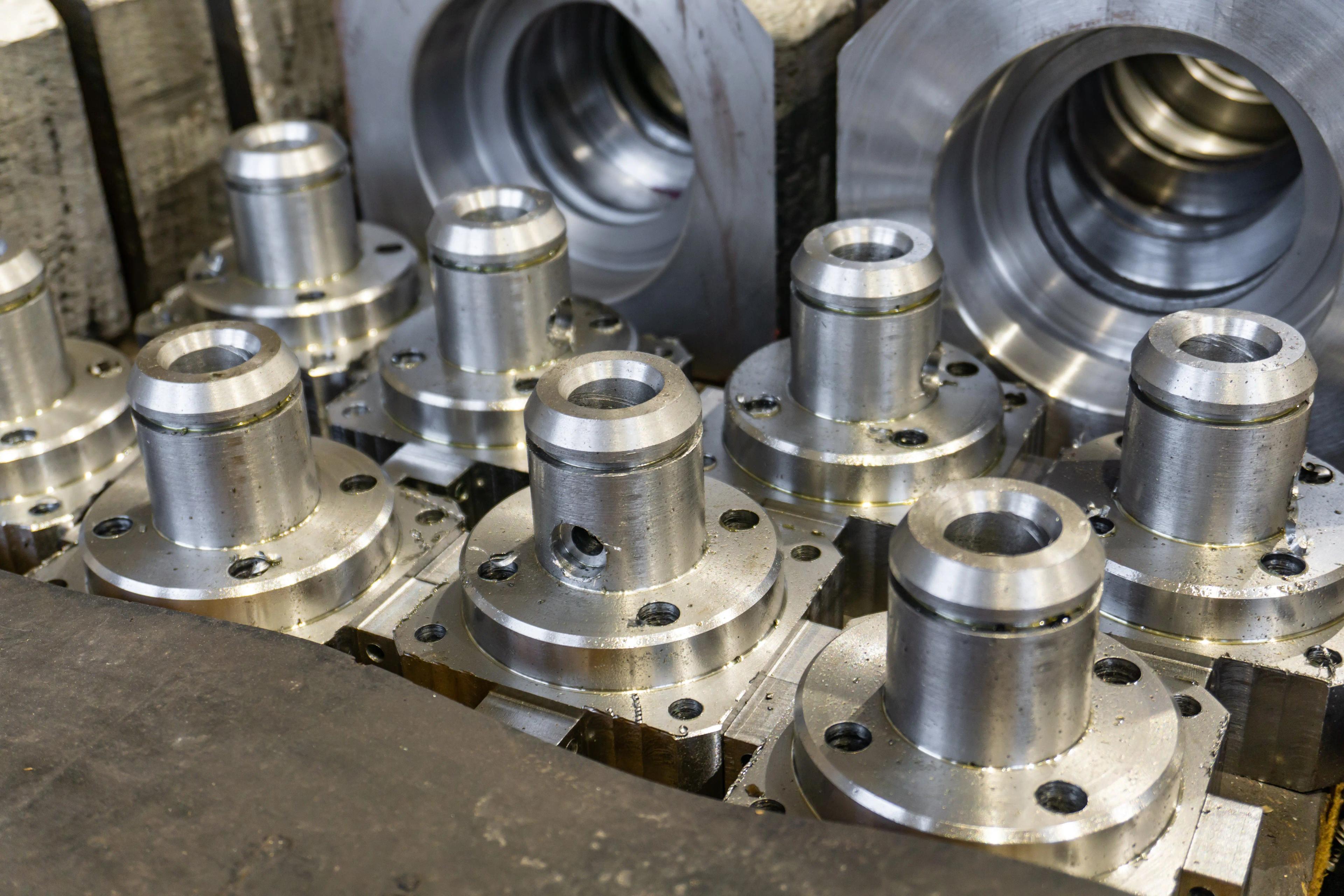
Machining Complex Parts: Challenges, Solutions & CNC Innovations
Summary
What Is a Complex Part in Machining?
Technical Challenges of CNC Machining Complex Parts
Difficult-to-Machine Materials
Tight Tolerances and Surface Quality
Accessibility of Areas
Tool Wear and Lifetime
Advanced Technologies for Machining Complex Parts
5-Axis and Multi-Axis Milling
Hybrid Machining (Additive + Subtractive)
Electrical Discharge Machining (EDM, Wire EDM)
High-Speed and Cryogenic Machining
Designing a Machinable Part (DFM)
DFM Best Practices
Outsourcing Complex Part Machining
Provide a Clear Specification Sheet
Check Certifications and Supplier Quality
Conclusion
What Is a Complex Part in Machining?
• Non-standard geometric shapes: curved surfaces, deep cavities, undercuts.
• Tight tolerances: micron-level fits to ensure assembly and performance.
• Difficult materials: superalloys like Inconel, titanium, or certain composites.
• Extreme dimensions: very small (micromechanics) or very large (aerospace structural) parts.
Examples: a turbine blade with internal cooling channels, a titanium medical implant, or a multi-cavity mold for plastic injection.
Technical Challenges of CNC Machining Complex Parts
Difficult-to-Machine Materials
Tight Tolerances and Surface Quality
Accessibility of Areas
Tool Wear and Lifetime
Advanced Technologies for Machining Complex Parts
5-Axis and Multi-Axis Milling
The advantages are numerous:
• Reduced setups: fewer re-clampings, meaning fewer errors and time savings.
• Easier access to complex areas: inclined cavities, undercuts, difficult pockets.
• Better surface quality: continuous toolpaths, no repositioning marks.
• Increased flexibility: machining freeform surfaces, turbine blades, or multi-cavity molds in a single operation.
Variants such as 3+2-axis machining also offer an excellent compromise by fixing the part’s orientation while machining on 3 axes, simplifying programming and reducing costs.
Hybrid Machining (Additive + Subtractive)
1. Additive manufacturing (metal 3D printing) to quickly create complex internal shapes or lightweight structures impossible to produce by milling alone.
2. CNC machining to finish functional zones with micrometric precision.
Example: in aerospace, a motor part can be printed with integrated cooling channels, then only the contact and critical surfaces are machined. This approach allows:
• Saving material, since production doesn’t start from a massive block,
• Reducing lead times by minimizing intermediate steps,
• Creating new geometries optimized through generative design and topological optimization.
This emerging technology paves the way for faster and more sustainable custom manufacturing.
Electrical Discharge Machining (EDM, Wire EDM)
• Sinking EDM: ideal for deep cavities, complex shapes, or mold impressions.
• Wire EDM: cuts extremely precise profiles in hard metals such as hardened steel, with tight tolerances and high-quality surface finishes.
Main advantages:
• No mechanical stress on the part (no deformation),
• Ability to machine inaccessible areas for rotary tools,
• Exceptional precision, sometimes better than ±2 µm.
This makes it essential for tooling, injection molds, and finely detailed parts.
High-Speed and Cryogenic Machining
Combined with cryogenic cooling (liquid nitrogen or CO₂), HSM pushes limits further: it extends tool life, prevents overheating and deformation, and enables the machining of superalloys under optimal conditions. This combination enhances productivity while being more environmentally friendly by drastically reducing conventional coolant use.
Designing a Machinable Part (DFM)
DFM Best Practices
• Simplify geometries: during prototyping, avoid unnecessary aesthetic details that are difficult and expensive to machine. A clean shape is faster to produce and easier to test. Complex decorative elements can be added later in the final version.
• Standardize holes and internal radii: use tool-standard diameters to avoid custom tools. Also, plan for internal radii (instead of sharp corners) to reduce machining time and tool wear.
• Optimize threads: in soft materials like aluminum or polymers, directly cut threads can wear quickly. Adding helical or threaded inserts improves strength and extends part life without major extra cost.
• Apply tolerances selectively: using micrometric tolerances on the entire part causes unnecessary cost increases. Reserve tight tolerances for critical zones (assembly surfaces, mechanical interfaces) and use wider ISO standards for others.
These best practices help reduce machining time and secure production by lowering nonconformity risks and rework. For buyers, integrating DFM from the design stage, in collaboration with the subcontractor, ensures a more reliable, faster, and competitive project.
Outsourcing Complex Part Machining
Provide a Clear Specification Sheet
Check Certifications and Supplier Quality
Aerospace and Defense: AS9100 / EN9100
These aerospace standards ensure strict quality systems: raw material traceability, special process control, and rigorous documentation management. They are often required by major aerospace and defense contractors.
Medical: ISO 13485
This certification covers medical devices. It ensures that the subcontractor controls quality, safety, and regulatory compliance for implants, surgical instruments, or prosthetics. It includes risk management and product traceability, both essential for patient safety and legal compliance.
General Industry: ISO 9001
The most widespread quality management standard. It ensures that the supplier has clear inspection, continuous improvement, and nonconformity tracking processes. Even if not industry-specific, it remains a sign of reliability and organizational maturity.
A good subcontractor doesn’t just produce — they verify and document. Buyers should ensure that the workshop uses modern inspection tools such as:
- CMM (Coordinate Measuring Machine): ideal for checking tight tolerances on complex parts.
- 3D optical scanners: useful for comparing the machined part to the digital model (reverse engineering, freeform inspection).
- Detailed measurement reports: often delivered with each batch, certifying that critical dimensions meet design specs.
- Destructive and non-destructive testing (NDT): X-ray, dye penetrant, or ultrasound testing for sensitive industries (aerospace, nuclear).
For industrial buyers, working with a certified supplier provides a major strategic advantage. It primarily reduces risks: quality compliance limits manufacturing errors, delivery delays, and costly disputes. It also saves time, since well-controlled parts require fewer returns and less additional inspection.
In highly regulated industries like aerospace, medical, or nuclear, partnering with a certified subcontractor strengthens a company’s credibility and reputation with clients and authorities. Therefore, always request up-to-date quality certificates and demand detailed inspection reports with every delivery — they ensure a long-term, reliable, and transparent industrial partnership.
Conclusion
Whether for aerospace, medical, or automotive industries, mastering complexity means staying competitive.
At QuoProd, we support companies in the design, optimization, and production of complex parts by combining industrial expertise with technological innovation.
More articles
Industrial Welding: Processes, Uses, and Advice
Invisible to the naked eye in many structures, yet indispensable, welding is a cornerstone of modern industry. Whether in metal construction, boilermaking, or machine manufacturing, it enables the permanent assembly of metal parts, while ensuring strength and reliability.
In this article, we explain the fundamentals of industrial welding: its different processes, their applications depending on materials and thickness, the criteria for choosing a technique… and most importantly, how to select a good welding contractor if you are an industrial buyer.
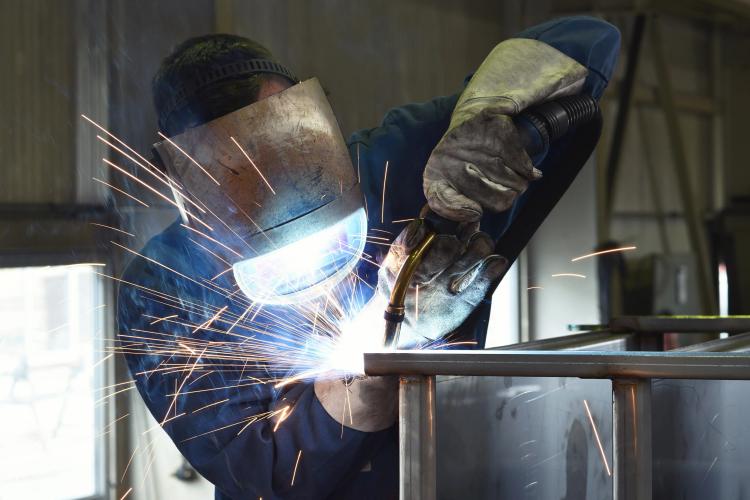
Industrial Welding: Processes, Uses, and Advice
Invisible to the naked eye in many structures, yet indispensable, welding is a cornerstone of modern industry. Whether in metal construction, boilermaking, or machine manufacturing, it enables the permanent assembly of metal parts, while ensuring strength and reliability.
In this article, we explain the fundamentals of industrial welding: its different processes, their applications depending on materials and thickness, the criteria for choosing a technique… and most importantly, how to select a good welding contractor if you are an industrial buyer.
Industrial Sheet Metal Work: Trades, Processes, Applications, and Advice
Transforming a simple sheet of metal into a functional, technical, or design part: that is the art of industrial sheet metal work. Present in a multitude of sectors — from automotive to aerospace, including construction, defense, or street furniture — this specialty is essential for custom manufacturing.
Thanks to processes like laser cutting, bending, stamping, or welding, sheet metal workers shape components that are strong, precise, and durable. A true precision craft, combining technical rigor and adaptation to the needs of each project.
In this article, we explain the basics of sheet metal work, its concrete applications, the manufacturing steps, and share our advice for choosing a reliable industrial partner capable of meeting your requirements.
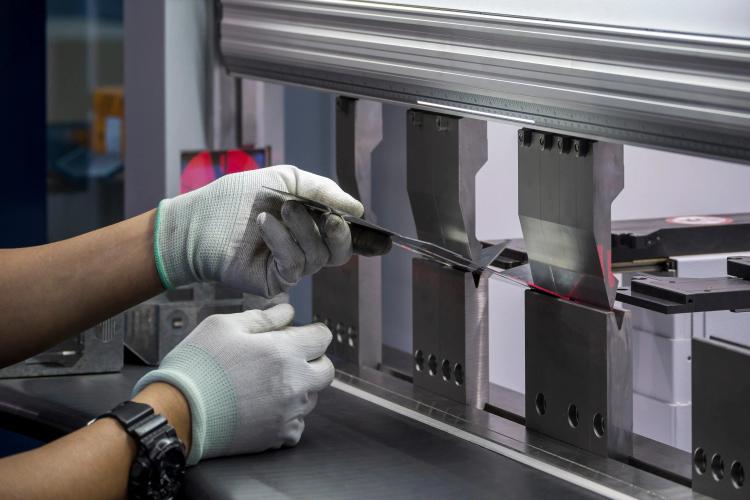
Industrial Sheet Metal Work: Trades, Processes, Applications, and Advice
Transforming a simple sheet of metal into a functional, technical, or design part: that is the art of industrial sheet metal work. Present in a multitude of sectors — from automotive to aerospace, including construction, defense, or street furniture — this specialty is essential for custom manufacturing.
Thanks to processes like laser cutting, bending, stamping, or welding, sheet metal workers shape components that are strong, precise, and durable. A true precision craft, combining technical rigor and adaptation to the needs of each project.
In this article, we explain the basics of sheet metal work, its concrete applications, the manufacturing steps, and share our advice for choosing a reliable industrial partner capable of meeting your requirements.

Should you always have an NDA signed before sharing your technical drawings?
In the mechanical and manufacturing industry, sharing technical drawings is an essential step, especially when looking for subcontractors to produce parts. These documents are the result of many hours of design, testing, and optimization — they represent know-how, a competitive advantage, and sometimes even a protected innovation or one in the process of being patented.
But one question keeps coming up: should you always require an NDA (Non-Disclosure Agreement) before sending your plans? The answer isn’t always a simple automatic “yes.” It depends on the project’s nature, the business relationship, and the type of information being shared. We’ve also prepared a ready-to-use template for you.

Should you always have an NDA signed before sharing your technical drawings?
In the mechanical and manufacturing industry, sharing technical drawings is an essential step, especially when looking for subcontractors to produce parts. These documents are the result of many hours of design, testing, and optimization — they represent know-how, a competitive advantage, and sometimes even a protected innovation or one in the process of being patented.
But one question keeps coming up: should you always require an NDA (Non-Disclosure Agreement) before sending your plans? The answer isn’t always a simple automatic “yes.” It depends on the project’s nature, the business relationship, and the type of information being shared. We’ve also prepared a ready-to-use template for you.
Subscribe to receive our newsletter
Follow our news right now by subscribing to our newsletter!
Platform
Newsletter
Receive the latest industry news
© 2026 QuoProd. All rights reserved.