
Practical sheets
21/10/2025
Should you always have an NDA signed before sharing your technical drawings?
But one question keeps coming up: should you always require an NDA (Non-Disclosure Agreement) before sending your plans? The answer isn’t always a simple automatic “yes.” It depends on the project’s nature, the business relationship, and the type of information being shared. We’ve also prepared a ready-to-use template for you.

Summary
What is an NDA?
Why have an NDA signed before sharing your technical drawings?
When should an NDA be signed?
Checklist: should you have an NDA signed?
When can an NDA be unnecessary?
What should an effective NDA include?
Confidentiality agreement template for your mechanical parts
NDA and French law: complementarity with trade secrets
Integrating NDA signing into a digital workflow
Signing NDAs directly from the platform
Centralization and security of technical documents
Strategic advantages for buyers
Conclusion
What is an NDA?
- Technical drawings
- Industrial designs
- Prototypes
- Manufacturing processes
- Financial and commercial data related to a project
In practice, the NDA formalizes a commitment to confidentiality from the subcontractor or partner, preventing any unauthorized distribution, copying, or reuse of the documents. In case of a breach, it serves as a legal basis for taking legal action and claiming damages. It is therefore much more than just a formality — it’s a tool for deterrence, protection, and accountability in industrial exchanges.
Why have an NDA signed before sharing your technical drawings?
• Legal protection: the confidentiality agreement formalizes confidentiality and simplifies legal recourse in case of dispute.
• Prevention of industrial espionage: your innovations cannot be freely used by a competitor through your subcontractor.
• Recognition of trade secrets: French law (Article L.151-1 of the Commercial Code) requires companies to take reasonable steps to protect their information. The NDA serves as proof of that.
• Clear framework for obligations: the subcontractor knows exactly what they can and cannot do with the documents (copying, archiving, storage period, return).
The confidentiality agreement acts as a real contractual safety belt, protecting your critical data from any unauthorized use while establishing a clear relationship of trust with your industrial partners.
When should an NDA be signed?
Here are the most common situations where a confidentiality agreement is necessary:
• During a tender involving multiple subcontractors: you are sharing technical drawings without knowing who will win the contract. The risk of uncontrolled distribution is real.
• Before the production of an unpatented innovation: until the patent is filed, your data remains vulnerable.
• For a prototype or R&D project with high strategic value: drawings, tolerances, manufacturing methods... all represent a competitive advantage that needs protection.
• In international partnerships: the wider the borders, the greater the legal risk (different regulations, limited recourse, lack of clear jurisdiction clauses).
• With a new or little-known supplier: without prior collaboration, trust is still fragile. An NDA provides a reassuring first framework.
Moreover, some trades such as sheet metal work, boiler making, or welding involve know-how that, when described in your technical documentation, deserves appropriate protection.
Checklist: should you have an NDA signed?
- Does the project involve sensitive or strategic data?
→ If yes: NDA mandatory.
- Does the plan relate to a prototype or unpatented innovation?
→ If yes: NDA mandatory.
- Is the partner based abroad?
→ If yes: NDA recommended.
- Are you working with a new supplier or subcontractor?
→ If yes: NDA recommended.
- Will you be sharing CAD files, 3D drawings, or complete documents at the quotation stage?
→ If yes: NDA recommended.
- Could a leak or unauthorized use harm your competitiveness or reputation?
→ If yes: NDA mandatory.
Outside of mandatory cases, if you answered “yes” to two or more questions, it’s strongly recommended to require NDA signature before sending any technical documents.
When can an NDA be unnecessary?
• Standard or public drawings:
For example, a part from a generic catalog, a standardized element, or a solution already available on the market. In such cases, the information is not particularly sensitive.
• Long-term partnerships with trusted suppliers:
When working with a long-standing partner where confidentiality is already covered by an existing master contract, signing a separate NDA may be redundant.
• Non-strategic information:
Some technical sketches or plan excerpts contain no critical data or proprietary processes. They’re shared simply to illustrate a request or start a discussion without revealing intellectual property.
The key is to show good judgment.
Requiring an NDA in low-stakes situations can slow down exchanges or appear overly cautious, even immature commercially. Conversely, ignoring one when necessary can expose your company to major risks.
What should an effective NDA include?
Here are the clauses that should always appear in a well-written NDA:
Clear definition of covered information
It’s crucial to clearly define the scope of confidentiality: 2D/3D drawings, CAD files, specifications, prototypes, manufacturing methods, etc. Any ambiguity about what’s protected can weaken the document’s legal strength.
List of parties bound by confidentiality
The agreement should specify who is covered — the subcontractor, but also their employees, service providers, or subsidiaries with access to the data.
Duration of confidentiality
The clause should state whether confidentiality applies only during the project or continues beyond (usually 2–5 years). A clear timeframe helps prevent disputes.
Handling of documents
The contract should specify what happens to documents at the end of the project — return, deletion, or destruction. This is particularly important for digital file exchanges.
Penalties for breach
An effective NDA must outline the consequences of a violation — contract termination, compensation claims, or legal action.
Applicable law and jurisdiction
It’s highly recommended to specify the governing law and competent court (e.g., French courts). This avoids foreign litigation, which is often long and costly.
Confidentiality agreement template for your mechanical parts
NDA and French law: complementarity with trade secrets
For information to qualify as a trade secret, three cumulative conditions must be met:
1. It’s not known or easily accessible to the public (e.g., a specific manufacturing process or unpublished plan).
2. It has economic value due to its confidential nature (e.g., a competitive advantage or innovation in development).
3. It is subject to reasonable protective measures by its holder (e.g., access control, confidentiality clauses, etc.).
This last point is where the NDA plays a key role.
Signing an NDA proves that you have actively taken measures to protect your information. In case of dispute, the document serves as evidence that you treated this data as confidential and formally governed its transmission.
In short: the NDA doesn’t replace the law, but it significantly strengthens your legal position. It’s a preventive measure that adds weight to your claim and makes confidentiality enforceable before a court.
Integrating NDA signing into a digital workflow
This is where a platform like QuoProd offers a concrete, operational solution.
Signing NDAs directly from the platform
• The buyer selects the “confidential” option and uploads their NDA.
• The platform asks any subcontractor who wants to access the project to sign the NDA provided by the buyer.
• The buyer validates or rejects the subcontractor’s NDA, who can then access the project and its files.
Result: no more follow-ups or lost email attachments.
Centralization and security of technical documents
• Hosted on European servers compliant with industrial security standards.
• End-to-end encryption ensures only authorized users can access the data.
• Action tracking (views, downloads, deletions) for complete traceability.
Strategic advantages for buyers
• Save time on administrative tasks.
• Reduce legal risks linked to missing, incomplete, or poorly drafted agreements.
• Control the sharing of sensitive information without leaving their workspace.
Conclusion
In practice, follow a simple rule: No sharing of sensitive information without a confidentiality agreement. For other cases (standard drawings, long-standing relationships), assess individually. This way, you protect your innovations while maintaining smooth subcontracting relationships.
More articles

Industrial Welding: Processes, Uses, and Advice
Invisible to the naked eye in many structures, yet indispensable, welding is a cornerstone of modern industry. Whether in metal construction, boilermaking, or machine manufacturing, it enables the permanent assembly of metal parts, while ensuring strength and reliability.
In this article, we explain the fundamentals of industrial welding: its different processes, their applications depending on materials and thickness, the criteria for choosing a technique… and most importantly, how to select a good welding contractor if you are an industrial buyer.

Industrial Welding: Processes, Uses, and Advice
Invisible to the naked eye in many structures, yet indispensable, welding is a cornerstone of modern industry. Whether in metal construction, boilermaking, or machine manufacturing, it enables the permanent assembly of metal parts, while ensuring strength and reliability.
In this article, we explain the fundamentals of industrial welding: its different processes, their applications depending on materials and thickness, the criteria for choosing a technique… and most importantly, how to select a good welding contractor if you are an industrial buyer.
Understanding CNC Machining: Technologies, Advantages, and Best Practices
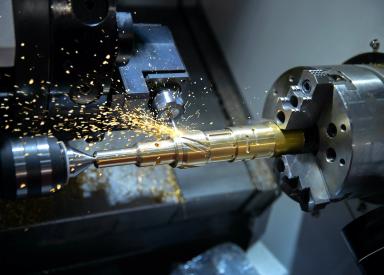
Machining is one of the most commonly used techniques as it allows raw materials to be transformed into precise and functional technical parts. However, over the past few decades, an innovation has revolutionized the way precision mechanical parts are produced: CNC machining, in other words, computer numerical control machining. This technology enables many companies — from turning-milling workshops to industrial subcontracting specialists — to produce custom parts with very high accuracy, while controlling production costs and delivery times. In this article, we will:
• Distinguish traditional machining from CNC machining,
• Explore the processes used: milling, turning, boring, threading, etc.,
• Present CNC design rules,
• And share with you concrete tips to reduce CNC manufacturing costs while maintaining very high quality.
Understanding CNC Machining: Technologies, Advantages, and Best Practices
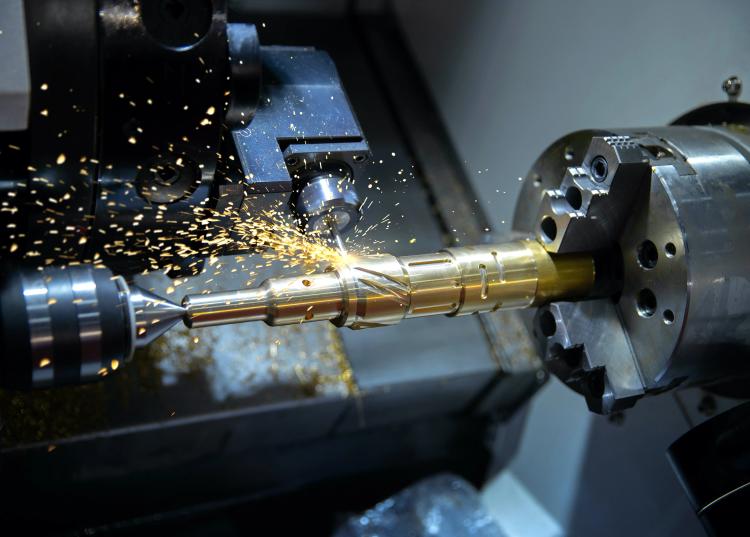
Machining is one of the most commonly used techniques as it allows raw materials to be transformed into precise and functional technical parts. However, over the past few decades, an innovation has revolutionized the way precision mechanical parts are produced: CNC machining, in other words, computer numerical control machining. This technology enables many companies — from turning-milling workshops to industrial subcontracting specialists — to produce custom parts with very high accuracy, while controlling production costs and delivery times. In this article, we will:
• Distinguish traditional machining from CNC machining,
• Explore the processes used: milling, turning, boring, threading, etc.,
• Present CNC design rules,
• And share with you concrete tips to reduce CNC manufacturing costs while maintaining very high quality.
How to Find a Good Subcontractor for Mechanical Parts?
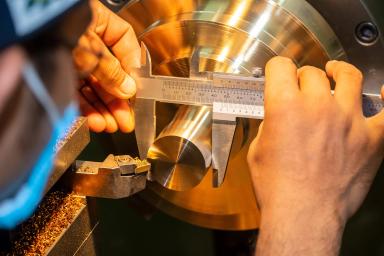
In industrial sectors such as aerospace, high-precision mechanics, or special machinery manufacturing, choosing the right subcontractor can make all the difference between a successful project and critical delays. From part design to machining, from one-off production to large series, the challenge is to find a reliable, skilled, and responsive technical partner.
This article provides a structured guide to selecting an industrial subcontractor, with the right criteria, analysis tools, and a deep understanding of mechanical and industrial requirements.
How to Find a Good Subcontractor for Mechanical Parts?
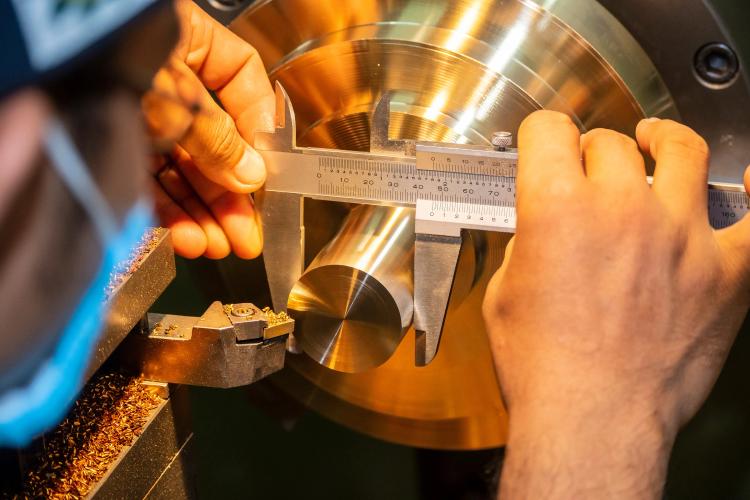
In industrial sectors such as aerospace, high-precision mechanics, or special machinery manufacturing, choosing the right subcontractor can make all the difference between a successful project and critical delays. From part design to machining, from one-off production to large series, the challenge is to find a reliable, skilled, and responsive technical partner.
This article provides a structured guide to selecting an industrial subcontractor, with the right criteria, analysis tools, and a deep understanding of mechanical and industrial requirements.
Subscribe to receive our newsletter
Follow our news right now by subscribing to our newsletter!
Platform
Newsletter
Receive the latest industry news
© 2026 QuoProd. All rights reserved.