
Technologies
03/06/2025
Industrial Sheet Metal Work: Trades, Processes, Applications, and Advice
Thanks to processes like laser cutting, bending, stamping, or welding, sheet metal workers shape components that are strong, precise, and durable. A true precision craft, combining technical rigor and adaptation to the needs of each project.
In this article, we explain the basics of sheet metal work, its concrete applications, the manufacturing steps, and share our advice for choosing a reliable industrial partner capable of meeting your requirements.
Summary
What is Industrial Sheet Metal Work?
Fine Sheet Metal vs. Industrial Sheet Metal: What's the Difference?
The Main Steps in Sheet Metal Work
Commonly Used Materials
Sectors That Manufacture Sheet Metal Parts
Focus: Cutting, Bending, and Welding Processes
Cutting
Bending
Welding
3 Tips for Choosing a Subcontractor
The Evolution of Sheet Metal Work: Towards More Automation and Sustainability
Final Word
What is Industrial Sheet Metal Work?
It relies on several complementary steps: the cutting of raw sheets, their forming by bending, curving, or stamping, then their assembly, generally by welding, bolting, or riveting. Finally, finishes can be applied: anti-corrosion treatment, painting, engraving, or polishing.
Parts resulting from sheet metal work can be technical (chassis, hulls, enclosures) or design (furniture, façade cladding), making it an extremely versatile and strategic discipline for industrial companies.
Fine Sheet Metal vs. Industrial Sheet Metal: What's the Difference?
• Industrial sheet metal work deals with thicker sheets or large dimensions, often in series. It is used for more robust structures, in sectors like construction, energy, or street furniture.
The Main Steps in Sheet Metal Work
Here is how it happens, step by step:
2. Cutting by laser, plasma, waterjet, or punching, depending on precision and material needs.
3. Bending and Forming via press brakes, roll benders, curving machines to achieve the desired shape.
4. Stamping or Rolling for complex or cylindrical shapes.
5. Welding & Assembly TIG, MIG/MAG techniques, or robotic welding.
6. Finishing & Surface Treatments galvanizing, painting, anodizing…
7. Quality Control measurements, functional tests, compliance with drawings.
Commonly Used Materials
Each industrial application — whether structural, decorative, or technical — imposes precise criteria that guide the choice of material:
• Stainless Steel corrosion-resistant, used in food processing, medical, chemistry.
• Aluminum lightweight, anti-corrosion, easy to form – ideal for aerospace or electronics.
• Copper, Brass, Titanium for specific uses (design, conductivity, lightness…).
Sectors That Manufacture Sheet Metal Parts
• Aerospace engine cowlings, air ducts, electronic supports, fairings.
• Construction cladding, façades, metal frameworks, staircases.
• Food Processing tanks, conveyors, work surfaces, hygienic stainless steel elements.
• Street Furniture & Design benches, bus shelters, planters, signage panels.
• Electronics & IT technical enclosures, racks, protective cabinets.
• Defense & Railway armored structures, covers, casings, mounting plates.
Focus: Cutting, Bending, and Welding Processes
Among them, certain steps play an essential role in the quality, functionality, and durability of the manufactured parts. A closer look at three particularly important processes in industrial sheet metal work: cutting, bending and welding.
Cutting
Bending
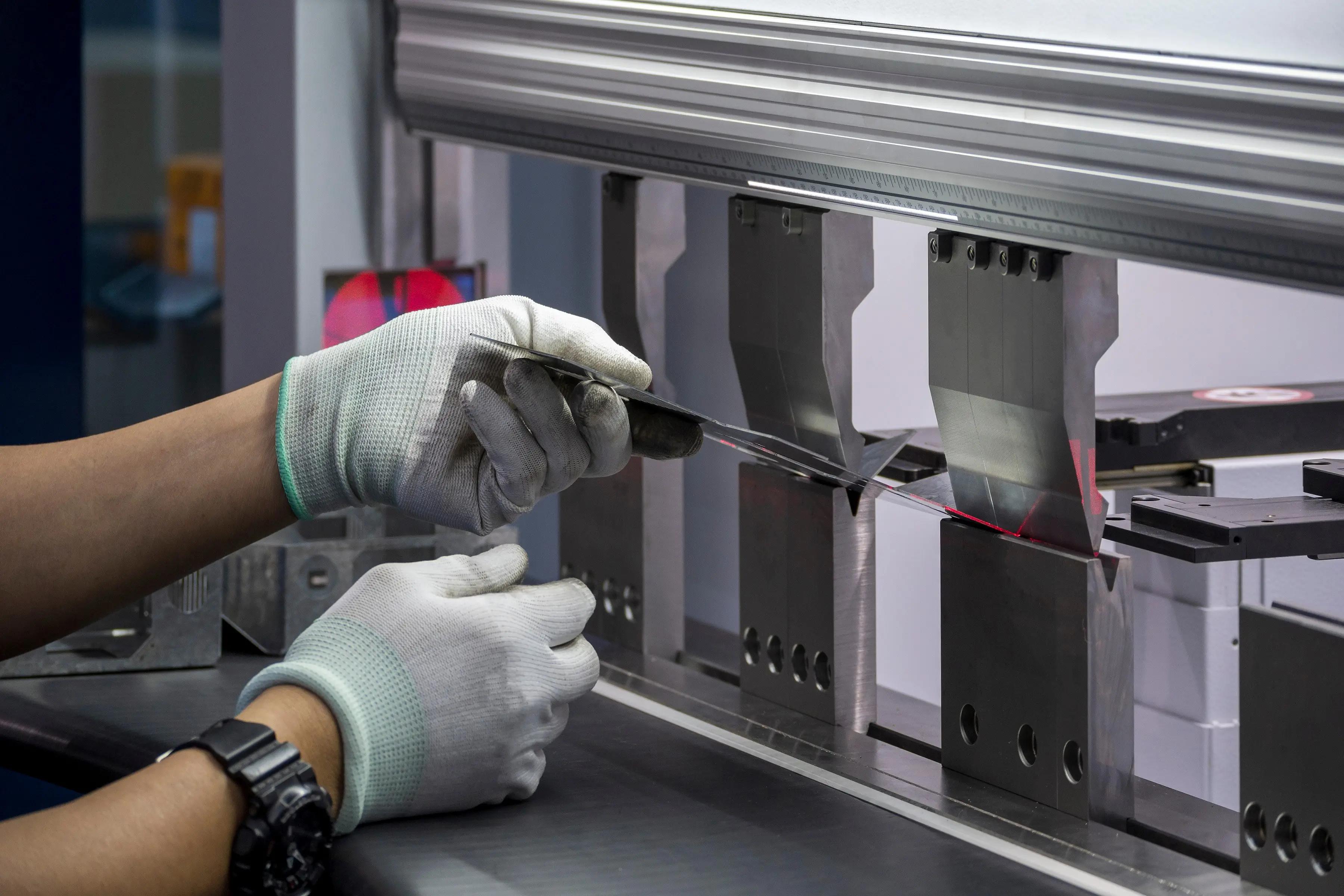
In short, bending is transforming a flat sheet into a three-dimensional part by giving it a precise angle or shape, without altering its mechanical properties. The operation is performed using press brakes.
Thanks to CNC press brakes, it is now possible to achieve high-precision bending, even on complex parts or those of great length. The bending tolerance thus becomes a key criterion for successful assemblies and compliance with technical drawings.
The choice of bend radius, sheet thickness, and type of material (steel, stainless steel, aluminum…) directly influences the quality of the final result.
That's why a good bending plan at the start of the project helps avoid deformations or breaks.
At subcontractors specializing in bending, this step is often optimized to adapt to specific needs: custom bending, cold bending, or the production of complex bent parts for fine sheet metal or industrial series applications.
Well-executed, industrial bending guarantees faster assembly, cleaner welds, and better part durability.
Welding
A good weld is what guarantees the strength, durability, and safety of the whole. So it's much more than simple assembly: it's a critical point in any metal fabrication project.
Depending on the needs, several techniques can be implemented:
• MIG/MAG Welding faster, often used in series on steel.
• Robotic Welding perfect for high-volume production, with a high level of consistency.
3 Tips for Choosing a Subcontractor
A well-equipped workshop is a workshop capable of adapting to your needs. Check for the presence of modern machines like fiber laser cutting, the latest generation CNC press brakes, or automated welders. A recent machine park guarantees better precision, optimized output, and controlled costs thanks to automation. It's also a sign of responsiveness in case of modifications or emergencies.
2. Check Their Sector Experience
Has your provider already worked in your sector? A provider with experience in your field of activity knows your specific constraints: strict hygiene standards for food processing, tight tolerances for aerospace, robustness requirements for construction or defense… This sector experience is a valuable asset, as it helps avoid errors and save time in technical exchanges.
3. Ask for Certifications
Certifications are the best proof of a workshop's seriousness and rigor. The most common ones:
• ISO 9001: guarantees a quality management system.
• ISO 3834: specific to welding requirements.
• EN 1090: mandatory for metal structures intended for construction.
• EN 9100: a must in aerospace.
These labels ensure that processes are documented, traceable, and compliant with your sector's standards.
The Evolution of Sheet Metal Work: Towards More Automation and Sustainability
• Digital Traceability and Centralized Project Management
• Energy Optimization and Waste Recycling
• Integration of Additive Manufacturing (Metal 3D Printing)
Final Word
More articles
Laser Cutting: Precision at the Service of Your Industrial Projects
Ultra-precise, fast, versatile... laser cutting checks all the boxes to meet industrial demands. This process, essential in thin sheet metal work as well as in the fabrication of complex parts, combines technical performance with design freedom.
But how does it work exactly? What materials can be cut? And most importantly, how do you choose a reliable supplier for your custom parts? We explain everything.
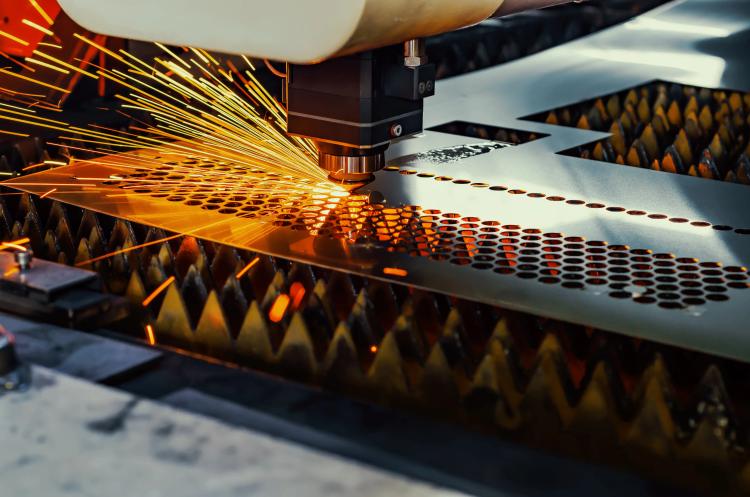
Laser Cutting: Precision at the Service of Your Industrial Projects
Ultra-precise, fast, versatile... laser cutting checks all the boxes to meet industrial demands. This process, essential in thin sheet metal work as well as in the fabrication of complex parts, combines technical performance with design freedom.
But how does it work exactly? What materials can be cut? And most importantly, how do you choose a reliable supplier for your custom parts? We explain everything.
Industrial Metal Fabrication: Definitions, Professions, Applications
Metal fabrication is present in almost all industrial sectors. It is a key discipline whose importance is often overlooked. From the design to the manufacture of tanks, metal structures, or custom equipment, it plays an essential role in production lines. This comprehensive guide explains what this profession entails, its multiple applications, techniques, and evolutions. We also share concrete advice for effectively choosing your metal fabrication service providers.
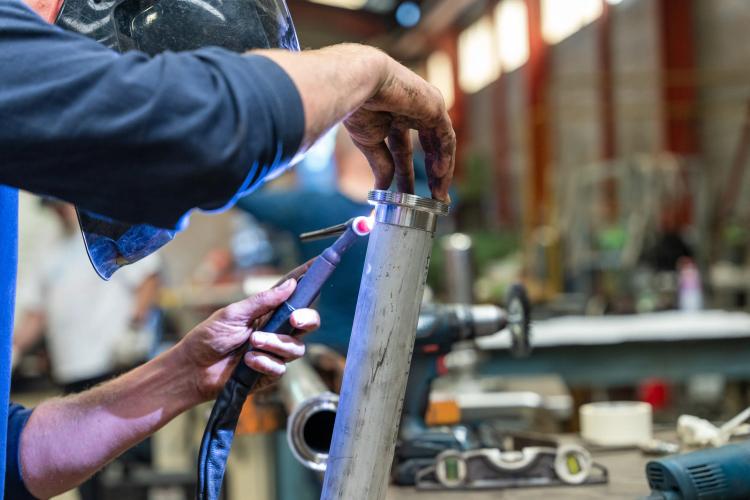
Industrial Metal Fabrication: Definitions, Professions, Applications
Metal fabrication is present in almost all industrial sectors. It is a key discipline whose importance is often overlooked. From the design to the manufacture of tanks, metal structures, or custom equipment, it plays an essential role in production lines. This comprehensive guide explains what this profession entails, its multiple applications, techniques, and evolutions. We also share concrete advice for effectively choosing your metal fabrication service providers.
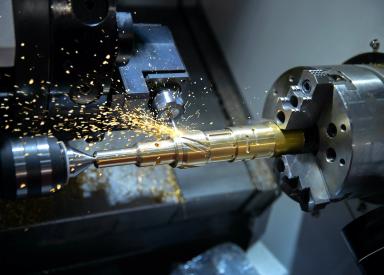
Understanding CNC Machining: Technologies, Advantages, and Best Practices
Machining is one of the most commonly used techniques as it allows raw materials to be transformed into precise and functional technical parts. However, over the past few decades, an innovation has revolutionized the way precision mechanical parts are produced: CNC machining, in other words, computer numerical control machining. This technology enables many companies — from turning-milling workshops to industrial subcontracting specialists — to produce custom parts with very high accuracy, while controlling production costs and delivery times. In this article, we will:
• Distinguish traditional machining from CNC machining,
• Explore the processes used: milling, turning, boring, threading, etc.,
• Present CNC design rules,
• And share with you concrete tips to reduce CNC manufacturing costs while maintaining very high quality.
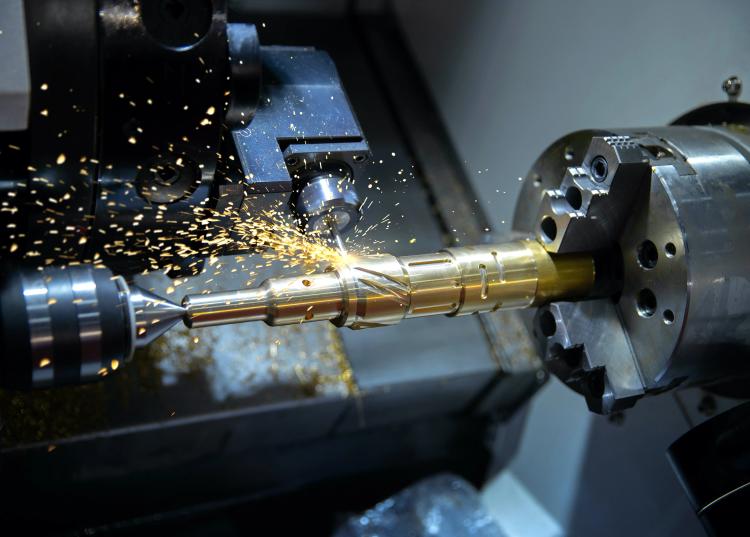
Understanding CNC Machining: Technologies, Advantages, and Best Practices
Machining is one of the most commonly used techniques as it allows raw materials to be transformed into precise and functional technical parts. However, over the past few decades, an innovation has revolutionized the way precision mechanical parts are produced: CNC machining, in other words, computer numerical control machining. This technology enables many companies — from turning-milling workshops to industrial subcontracting specialists — to produce custom parts with very high accuracy, while controlling production costs and delivery times. In this article, we will:
• Distinguish traditional machining from CNC machining,
• Explore the processes used: milling, turning, boring, threading, etc.,
• Present CNC design rules,
• And share with you concrete tips to reduce CNC manufacturing costs while maintaining very high quality.
Subscribe to receive our newsletter
Follow our news right now by subscribing to our newsletter!
Platform
Newsletter
Receive the latest industry news
© 2026 QuoProd. All rights reserved.