
Articles
Innovations, news and techniques of the mechanical industry
Find useful information about industrial subcontracting
The articles

Hot or Cold Forging: How to Make the Right Choice for Your Mechanical Parts?
Forging is a metal forming technique that transforms a raw billet into a forged part through the application of impacts or pressure. Used for centuries, this process has modernized with the use of hydraulic presses, dies, and industrial furnaces.
But should you opt for hot or cold forging? Which materials to choose? Which technique guarantees the best strength or precision?

The Guide to ISO Certifications for Mechanical Parts Subcontracting
As an industrial buyer, you are responsible for the quality of the mechanical parts you integrate into your products or systems. But how can you ensure that your subcontractors adhere to the strictest standards? ISO certifications are now an essential selection criterion: they guarantee rigor, traceability, regulatory compliance, and reduce risks for you.
In this guide, we review the main ISO certifications to require, based on the type of subcontracting (machining, sheet metal work, welding, etc.) and the application sectors (automotive, aerospace, medical, etc.).

What is Metal 3D Printing and How Does It Work?
Metal 3D printing, or metal additive manufacturing, is revolutionizing how industrial parts are designed, manufactured, and optimized. Unlike traditional processes (machining, casting), it enables the creation of complex geometries layer by layer from a 3D file. This technology opens new perspectives for manufacturing high-value functional parts across diverse sectors including aerospace, medical, and automotive.

Surface Finishes and Treatments for Sheet Metal Parts: The Complete Guide
In the mechanical industry, product quality isn't limited to just its geometry or tolerances. The surface finish plays a decisive role in the overall performance of a part, whether in terms of resistance, aesthetics, or compliance. For parts from industrial sheet metal fabrication, this step is often crucial.
In this guide, we explore the different surface finishes and treatments, their objectives, and their advantages. Whether you are an industrial buyer, production manager, or industrialization engineer, you will find the key information to better choose your finishing processes, optimize your costs, and guarantee the compliance of your metal parts.
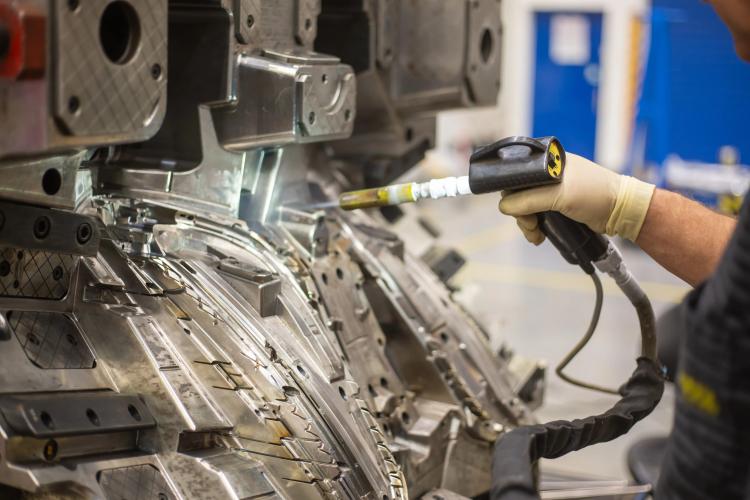
Metal Injection Molding (MIM): What Is It?

Machining Complex Parts: Challenges, Solutions & CNC Innovations
In modern industry, machining complex parts has become a strategic challenge. The aerospace, medical, and automotive sectors demand components with increasingly intricate geometries, made from difficult-to-machine materials, with micrometric tolerances and flawless surface finishes. Thanks to advanced CNC machining technologies, it is now possible to produce these parts with precision, efficiency, and competitiveness. But machining such parts remains a challenge that requires design expertise, process control, and careful selection of tools and machines.

Boilermaking: 5 mistakes to avoid when choosing your service provider
Boilermaking plays a strategic role in the industry. It involves the design and production of custom-made metal parts or structures from sheet metal, plates, pipes, or profiles. Whether in the food industry, shipbuilding, petrochemicals, or the pharmaceutical sector, choosing the right boilermaking service provider can make the difference between a successful project and a series of problems.
Here are the 5 common mistakes to avoid to keep your project on track.

Should you always have an NDA signed before sharing your technical drawings?
In the mechanical and manufacturing industry, sharing technical drawings is an essential step, especially when looking for subcontractors to produce parts. These documents are the result of many hours of design, testing, and optimization — they represent know-how, a competitive advantage, and sometimes even a protected innovation or one in the process of being patented.
But one question keeps coming up: should you always require an NDA (Non-Disclosure Agreement) before sending your plans? The answer isn’t always a simple automatic “yes.” It depends on the project’s nature, the business relationship, and the type of information being shared. We’ve also prepared a ready-to-use template for you.

SEPEM Industries Angers Trade Show 2025: Key Information
From October 7 to 9, 2025, the Angers Exhibition Center will host the 9th edition of the SEPEM Industries Trade Show, a regional professional trade show that has become a must-attend event for all industry professionals. This industrial trade show, dedicated to industrial sectors, stands as a true crossroads of innovative solutions for production sites in the Pays de la Loire region and beyond.

How to Find a Good Subcontractor for Mechanical Parts?
In industrial sectors such as aerospace, high-precision mechanics, or special machinery manufacturing, choosing the right subcontractor can make all the difference between a successful project and critical delays. From part design to machining, from one-off production to large series, the challenge is to find a reliable, skilled, and responsive technical partner.
This article provides a structured guide to selecting an industrial subcontractor, with the right criteria, analysis tools, and a deep understanding of mechanical and industrial requirements.

Industrial Sheet Metal Work: Trades, Processes, Applications, and Advice
Transforming a simple sheet of metal into a functional, technical, or design part: that is the art of industrial sheet metal work. Present in a multitude of sectors — from automotive to aerospace, including construction, defense, or street furniture — this specialty is essential for custom manufacturing.
Thanks to processes like laser cutting, bending, stamping, or welding, sheet metal workers shape components that are strong, precise, and durable. A true precision craft, combining technical rigor and adaptation to the needs of each project.
In this article, we explain the basics of sheet metal work, its concrete applications, the manufacturing steps, and share our advice for choosing a reliable industrial partner capable of meeting your requirements.

EDM or Conventional Machining: Which Method to Choose?
EDM or conventional machining? This question often comes up for buyers. Each process has its strengths, limitations, and hidden costs. Our goal here is not to provide theory, but to give you concrete benchmarks to choose the right method based on your parts, volumes, and deadlines.

Industrial Welding: Processes, Uses, and Advice
Invisible to the naked eye in many structures, yet indispensable, welding is a cornerstone of modern industry. Whether in metal construction, boilermaking, or machine manufacturing, it enables the permanent assembly of metal parts, while ensuring strength and reliability.
In this article, we explain the fundamentals of industrial welding: its different processes, their applications depending on materials and thickness, the criteria for choosing a technique… and most importantly, how to select a good welding contractor if you are an industrial buyer.

Laser Cutting: Precision at the Service of Your Industrial Projects
Ultra-precise, fast, versatile... laser cutting checks all the boxes to meet industrial demands. This process, essential in thin sheet metal work as well as in the fabrication of complex parts, combines technical performance with design freedom.
But how does it work exactly? What materials can be cut? And most importantly, how do you choose a reliable supplier for your custom parts? We explain everything.

Understanding CNC Machining: Technologies, Advantages, and Best Practices
Machining is one of the most commonly used techniques as it allows raw materials to be transformed into precise and functional technical parts. However, over the past few decades, an innovation has revolutionized the way precision mechanical parts are produced: CNC machining, in other words, computer numerical control machining. This technology enables many companies — from turning-milling workshops to industrial subcontracting specialists — to produce custom parts with very high accuracy, while controlling production costs and delivery times. In this article, we will:
• Distinguish traditional machining from CNC machining,
• Explore the processes used: milling, turning, boring, threading, etc.,
• Present CNC design rules,
• And share with you concrete tips to reduce CNC manufacturing costs while maintaining very high quality.

Industrial Metal Fabrication: Definitions, Professions, Applications
Metal fabrication is present in almost all industrial sectors. It is a key discipline whose importance is often overlooked. From the design to the manufacture of tanks, metal structures, or custom equipment, it plays an essential role in production lines. This comprehensive guide explains what this profession entails, its multiple applications, techniques, and evolutions. We also share concrete advice for effectively choosing your metal fabrication service providers.
Newsletter
Receive the latest industry news
© 2026 QuoProd. All rights reserved.