
Practical sheets
05/08/2025
How to Find a Good Subcontractor for Mechanical Parts?
This article provides a structured guide to selecting an industrial subcontractor, with the right criteria, analysis tools, and a deep understanding of mechanical and industrial requirements.
Summary
Why Outsource the Manufacturing of Mechanical Parts?
Cost Savings and Flexibility
Access to Specialized Expertise
First Step: Clearly Define Your Needs
The Technical Specifications
Criteria for Selecting a Good Subcontractor
Technical Skills and Equipment
Quality, Traceability, and Certifications
On-Time Delivery and Responsiveness
Location & Logistics
Common Mistakes to Avoid
Where to Find a Good Industrial Subcontractor?
QuoProd: A Tool to Source Suppliers and Beyond
Final Thoughts
Why Outsource the Manufacturing of Mechanical Parts?
Cost Savings and Flexibility
Companies gain agility: It becomes easier to adjust volumes (small or medium series), launch a prototype, or handle order peaks without overloading internal schedules.
Access to Specialized Expertise
This translates to quality and speed advantages.
First Step: Clearly Define Your Needs
The Technical Specifications
• The type of mechanical parts to be produced (shapes, materials, geometries, tolerances, surface finishes).
• Intended processes (turning, milling, cutting, injection, bending, forging, etc.).
• Required quantities (from prototype to large series).
• Quality requirements (ISO standards, dimensional inspection, metrology, surface treatment tests, etc.).
• Lead times, logistical constraints (handling, storage, delivery, etc.).
Criteria for Selecting a Good Subcontractor
Technical Skills and Equipment
Verify their ability to work with different materials, especially those you plan to use for your parts.
Quality, Traceability, and Certifications
Request to review:
• The quality control plan.
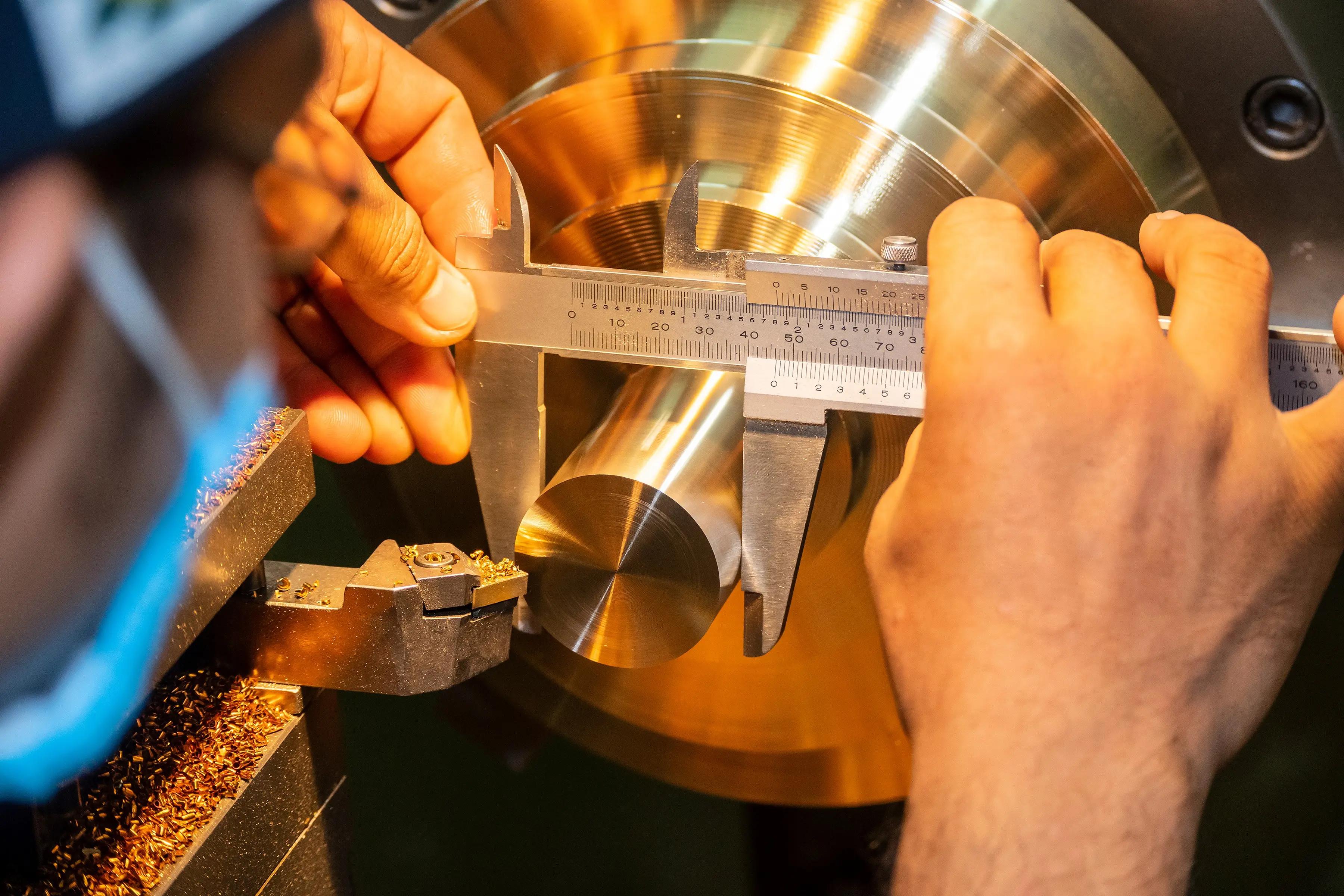
• Measurement equipment (FARO arm, CMM, etc.).
• Internal or customer audit reports.
Part traceability (serial numbers, markings, material batches) is also critical, especially for highly technical or critical parts.
On-Time Delivery and Responsiveness
• Their production capacity (volume, shift schedules, cycle times).
• Response times to inquiries.
• Emergency management procedures.
Medium and large series often require a well-established industrial setup. Ensure they maintain raw material stocks (bars, sheets, profiles) and have a reliable supply chain.
Location & Logistics
Common Mistakes to Avoid
• Selecting based solely on price without evaluating manufacturing quality.
• Failing to validate the subcontractor’s actual capabilities before signing.
• Overlooking logistical or contractual risks.
• Omitting confidentiality clauses or design control in contracts.
Take time to visit the facility, speak with their engineering team, review sample parts, and interview several of the subcontractor’s current clients.
Where to Find a Good Industrial Subcontractor?
Today, several options exist:
• Industrial directories and trade shows (Global Industrie, Sepem, Siane).
• Regional and national networks: Chambers of Commerce, France Industrie, FIM.
• Word of mouth within your professional network.
• Specialized platforms like QuoProd.
QuoProd: A Tool to Source Suppliers and Beyond
Thanks to its qualified network of mechanical manufacturing experts, QuoProd connects you with the best partners based on your precise criteria: processes (machining, sheet metal, additive manufacturing, etc.), industries, capacities, location, or certifications.
But the platform goes far beyond matchmaking. It centralizes the entire subcontracting process: quote requests, technical and cost comparisons, project tracking, technical documentation.
You gain a single solution to source suppliers, compare offers, and oversee production—whether for small batches, complex one-off parts, or custom mechanical components.
The result: You save time, boost responsiveness, and ensure reliability across your supply chain—all while retaining full control.
Final Thoughts
Maximize your chances by structuring your approach, asking the right questions, and leveraging effective sourcing tools like QuoProd.
More articles
Understanding CNC Machining: Technologies, Advantages, and Best Practices
Machining is one of the most commonly used techniques as it allows raw materials to be transformed into precise and functional technical parts. However, over the past few decades, an innovation has revolutionized the way precision mechanical parts are produced: CNC machining, in other words, computer numerical control machining. This technology enables many companies — from turning-milling workshops to industrial subcontracting specialists — to produce custom parts with very high accuracy, while controlling production costs and delivery times. In this article, we will:
• Distinguish traditional machining from CNC machining,
• Explore the processes used: milling, turning, boring, threading, etc.,
• Present CNC design rules,
• And share with you concrete tips to reduce CNC manufacturing costs while maintaining very high quality.
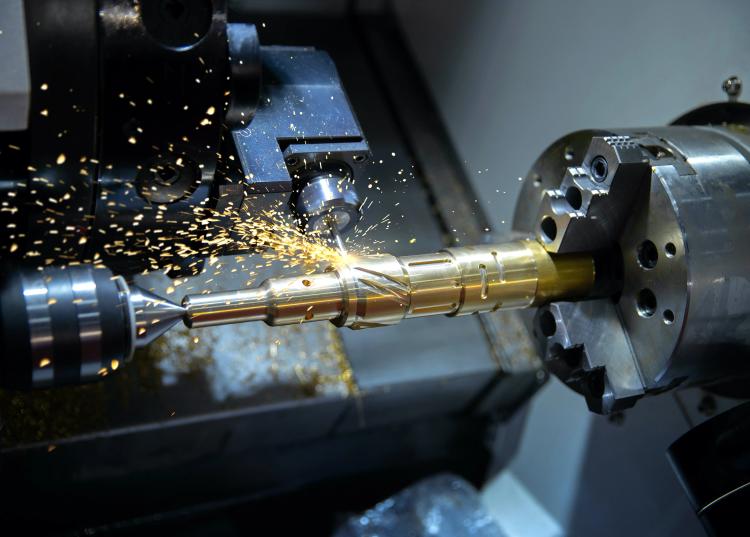
Understanding CNC Machining: Technologies, Advantages, and Best Practices
Machining is one of the most commonly used techniques as it allows raw materials to be transformed into precise and functional technical parts. However, over the past few decades, an innovation has revolutionized the way precision mechanical parts are produced: CNC machining, in other words, computer numerical control machining. This technology enables many companies — from turning-milling workshops to industrial subcontracting specialists — to produce custom parts with very high accuracy, while controlling production costs and delivery times. In this article, we will:
• Distinguish traditional machining from CNC machining,
• Explore the processes used: milling, turning, boring, threading, etc.,
• Present CNC design rules,
• And share with you concrete tips to reduce CNC manufacturing costs while maintaining very high quality.
Industrial Sheet Metal Work: Trades, Processes, Applications, and Advice
Transforming a simple sheet of metal into a functional, technical, or design part: that is the art of industrial sheet metal work. Present in a multitude of sectors — from automotive to aerospace, including construction, defense, or street furniture — this specialty is essential for custom manufacturing.
Thanks to processes like laser cutting, bending, stamping, or welding, sheet metal workers shape components that are strong, precise, and durable. A true precision craft, combining technical rigor and adaptation to the needs of each project.
In this article, we explain the basics of sheet metal work, its concrete applications, the manufacturing steps, and share our advice for choosing a reliable industrial partner capable of meeting your requirements.
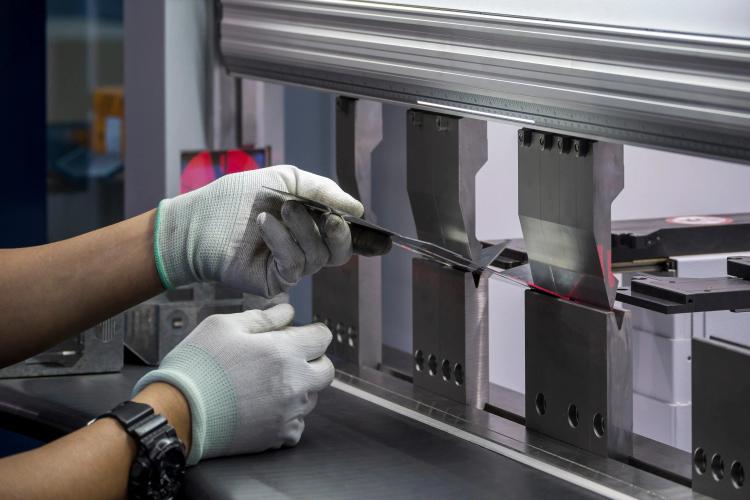
Industrial Sheet Metal Work: Trades, Processes, Applications, and Advice
Transforming a simple sheet of metal into a functional, technical, or design part: that is the art of industrial sheet metal work. Present in a multitude of sectors — from automotive to aerospace, including construction, defense, or street furniture — this specialty is essential for custom manufacturing.
Thanks to processes like laser cutting, bending, stamping, or welding, sheet metal workers shape components that are strong, precise, and durable. A true precision craft, combining technical rigor and adaptation to the needs of each project.
In this article, we explain the basics of sheet metal work, its concrete applications, the manufacturing steps, and share our advice for choosing a reliable industrial partner capable of meeting your requirements.
Industrial Metal Fabrication: Definitions, Professions, Applications
Metal fabrication is present in almost all industrial sectors. It is a key discipline whose importance is often overlooked. From the design to the manufacture of tanks, metal structures, or custom equipment, it plays an essential role in production lines. This comprehensive guide explains what this profession entails, its multiple applications, techniques, and evolutions. We also share concrete advice for effectively choosing your metal fabrication service providers.
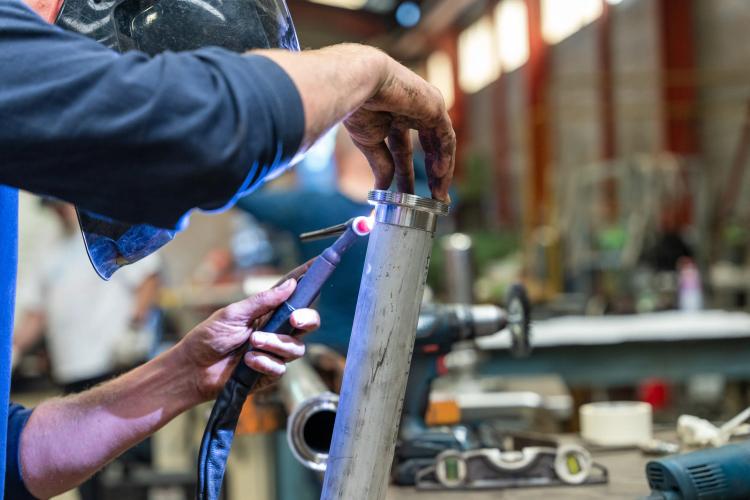
Industrial Metal Fabrication: Definitions, Professions, Applications
Metal fabrication is present in almost all industrial sectors. It is a key discipline whose importance is often overlooked. From the design to the manufacture of tanks, metal structures, or custom equipment, it plays an essential role in production lines. This comprehensive guide explains what this profession entails, its multiple applications, techniques, and evolutions. We also share concrete advice for effectively choosing your metal fabrication service providers.
Subscribe to receive our newsletter
Follow our news right now by subscribing to our newsletter!
Platform
Newsletter
Receive the latest industry news
© 2026 QuoProd. All rights reserved.