
Technologies
01/07/2025
EDM or Conventional Machining: Which Method to Choose?
Summary
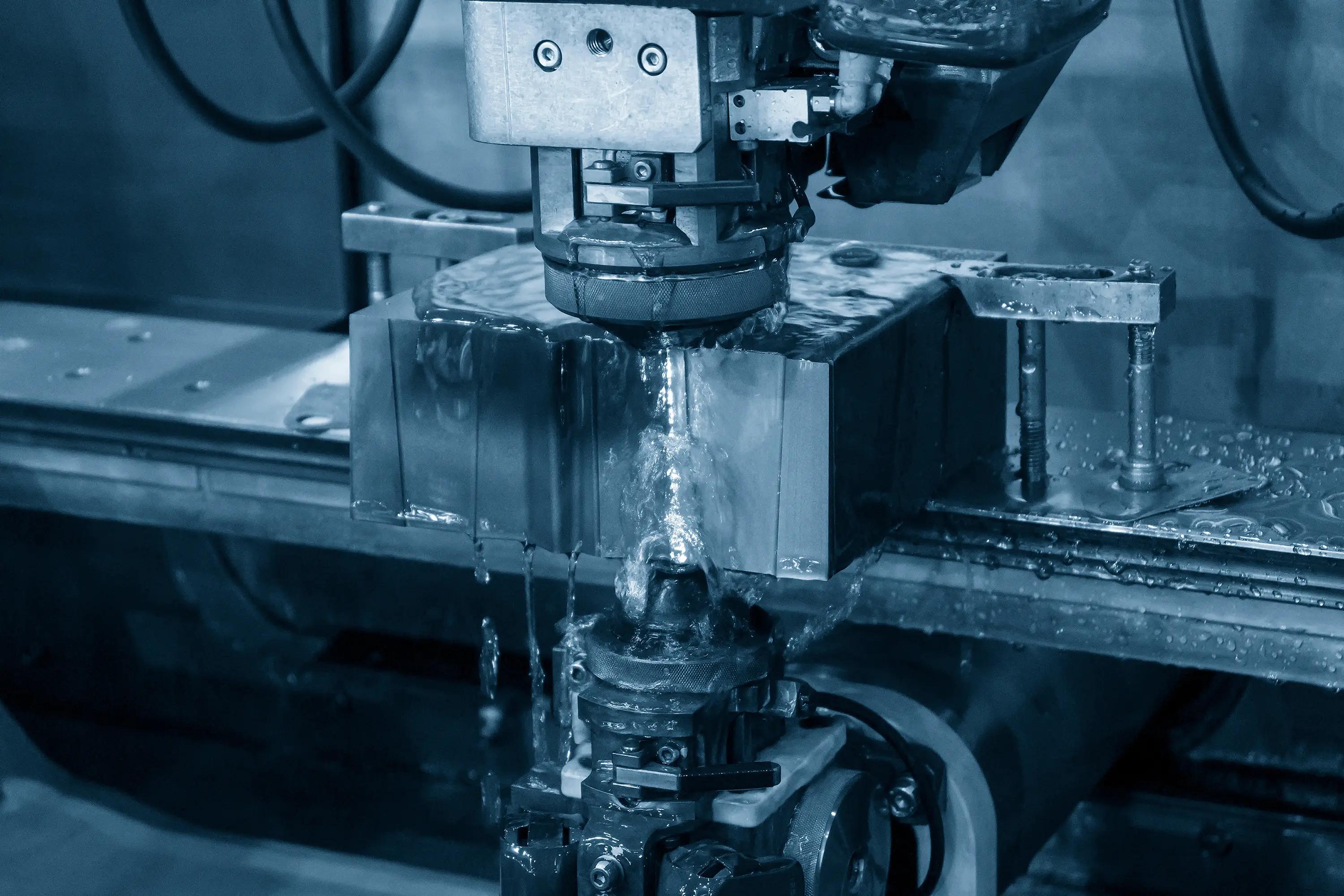
Understanding EDM: A Non-Contact Machining Process
Operating Principle
The Different Types of EDM
Compatible Materials and Achievable Accuracies
Conventional Machining: Strengths, Limits, and Applications
Turning, Milling, Drilling: Useful Reminders
When to Prioritize Conventional Methods?
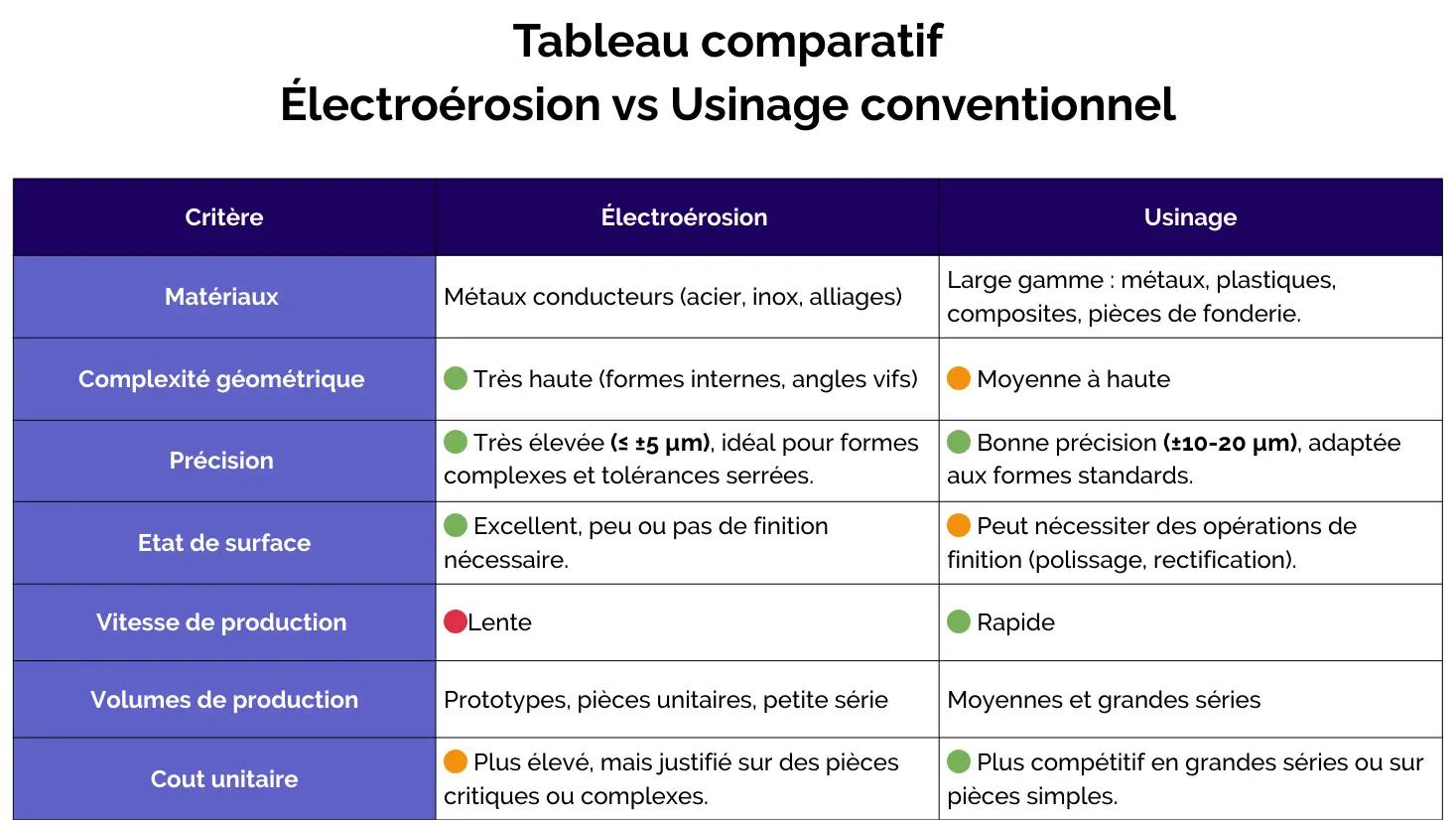
EDM vs. Conventional Machining: The Comparison Table
In Which Cases to Choose EDM? Checklist
Sector Focus: Medical, Aerospace, Luxury, Tooling
How to Choose the Right Subcontractor for Your EDM Needs?
Machine Type and Technical Capability
Certifications and Standards to Request
Samples or Proof of Concept (POC)
Traceability, Software, and Internal Quality
Conclusion: A Complementarity Rather Than a Binary Choice
Understanding EDM: A Non-Contact Machining Process
Operating Principle
Unlike a conventional machine tool (like a milling machine, machining center, or CNC lathe), the electrode never comes into contact with the part. This avoids any mechanical deformation and allows machining of very hard metallic parts, such as stainless steel, carbide, or other technical alloys.
Used in precision machining workshops, this process allows for the production of single parts, custom parts, medium runs, or prototyping.
The Different Types of EDM
• Wire EDM: cutting precise shapes in cast parts, sheets, or composite materials; suitable for thin sheet metal work or complex shapes.
• Fast Hole Drilling EDM: for machining very fine or deep holes, even in large parts.
This process is widely used in industrial sectors such as aerospace, precision mechanics, or medical industry. Specialized machining centers typically have dedicated CNC machines. They are controlled via CAD/CAM, with quality control, traceability, and the ability to handle small and medium batch sizes.
Compatible Materials and Achievable Accuracies
It allows for micrometric precision (often ≤ ±5 µm), without thermal deformation, with an excellent surface finish. This makes it an essential process for technical parts, complex machined components, or mechanical sub-assemblies requiring tight tolerances.
Conventional Machining: Strengths, Limits, and Applications
Turning, Milling, Drilling: Useful Reminders
It is suitable for machining metal parts, plastics, cast parts, and even composite materials. This process allows for the manufacture of medium and large batch parts, with a good precision/cost ratio, especially when the part does not have extreme geometric constraints.
Modern mechanical workshops or machining units often combine several processes: high-speed milling, welding, cutting, boring, and even cylindrical grinding.
They also integrate an engineering office, CAD/CAM software, quality monitoring (ISO), and can produce mechanical assemblies or spare parts on an industrial scale.
When to Prioritize Conventional Methods?
• Large batches of simple to moderately complex parts.
• Industrial subcontracting projects where unit cost is crucial.
• Machining of standard shapes in plastics, ferrous metals, or structural parts.
• Fitting, assembly, and mounting of series-produced mechanical parts.
• Fields such as general mechanics, sheet metal work, cutting, or bending.
EDM vs. Conventional Machining: The Comparison Table
In Which Cases to Choose EDM? Checklist
EDM is feasible if:
✓ Your parts have a high geometric complexity: internal shapes, sharp angles, undercuts...
✓ Your parts are made from very hard and conductive materials: carbide, stainless steel, refractory alloys…
✓ Your parts are produced in low to medium volumes: single parts, small batches, or prototypes.
✓ Your parts have tight tolerances and high-precision finish: precision ≤ ±5 µm, surface finish Ra ≤ 0.2 µm.
EDM is not feasible if:
x Your production lead times are very short: EDM is slower than conventional machining.
x You prioritize a low unit cost: for large batches of simple parts, CNC machining remains more economical.
Sector Focus: Medical, Aerospace, Luxury, Tooling
How to Choose the Right Subcontractor for Your EDM Needs?
Machine Type and Technical Capability
Certifications and Standards to Request
• ISO 13485 for medical (implants, surgical instruments)
• EN 9100 for aerospace and space
• ISO 9001 to guarantee a solid quality foundation
These certifications demonstrate structured quality control, process traceability, and a high level of requirements.
Samples or Proof of Concept (POC)
Traceability, Software, and Internal Quality
Conclusion: A Complementarity Rather Than a Binary Choice
The key is to choose the right process at the right time, based on your cost, tolerance, cadence, and material requirements.
Need to machine a complex part, launch a prototype, or find a reliable industrial partner? Test QuoProd, and access a qualified network of mechanical workshops, ready to meet your challenges with performance and traceability.
More articles
Understanding CNC Machining: Technologies, Advantages, and Best Practices
Machining is one of the most commonly used techniques as it allows raw materials to be transformed into precise and functional technical parts. However, over the past few decades, an innovation has revolutionized the way precision mechanical parts are produced: CNC machining, in other words, computer numerical control machining. This technology enables many companies — from turning-milling workshops to industrial subcontracting specialists — to produce custom parts with very high accuracy, while controlling production costs and delivery times. In this article, we will:
• Distinguish traditional machining from CNC machining,
• Explore the processes used: milling, turning, boring, threading, etc.,
• Present CNC design rules,
• And share with you concrete tips to reduce CNC manufacturing costs while maintaining very high quality.
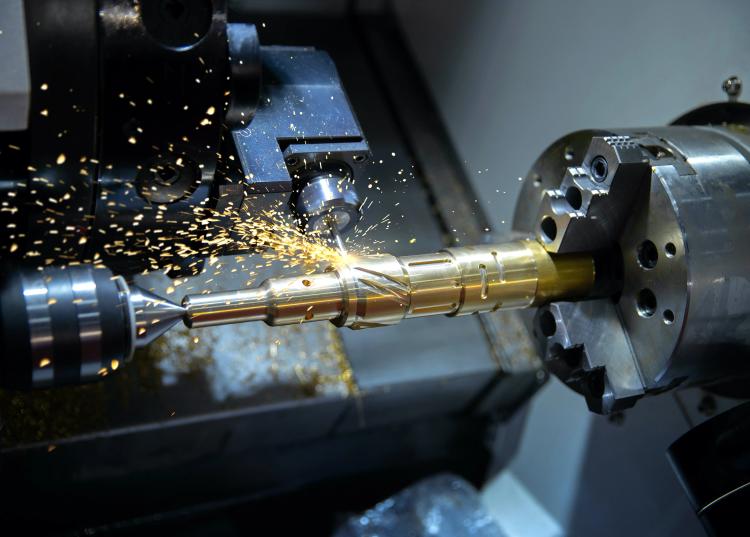
Understanding CNC Machining: Technologies, Advantages, and Best Practices
Machining is one of the most commonly used techniques as it allows raw materials to be transformed into precise and functional technical parts. However, over the past few decades, an innovation has revolutionized the way precision mechanical parts are produced: CNC machining, in other words, computer numerical control machining. This technology enables many companies — from turning-milling workshops to industrial subcontracting specialists — to produce custom parts with very high accuracy, while controlling production costs and delivery times. In this article, we will:
• Distinguish traditional machining from CNC machining,
• Explore the processes used: milling, turning, boring, threading, etc.,
• Present CNC design rules,
• And share with you concrete tips to reduce CNC manufacturing costs while maintaining very high quality.
Industrial Welding: Processes, Uses, and Advice
Invisible to the naked eye in many structures, yet indispensable, welding is a cornerstone of modern industry. Whether in metal construction, boilermaking, or machine manufacturing, it enables the permanent assembly of metal parts, while ensuring strength and reliability.
In this article, we explain the fundamentals of industrial welding: its different processes, their applications depending on materials and thickness, the criteria for choosing a technique… and most importantly, how to select a good welding contractor if you are an industrial buyer.
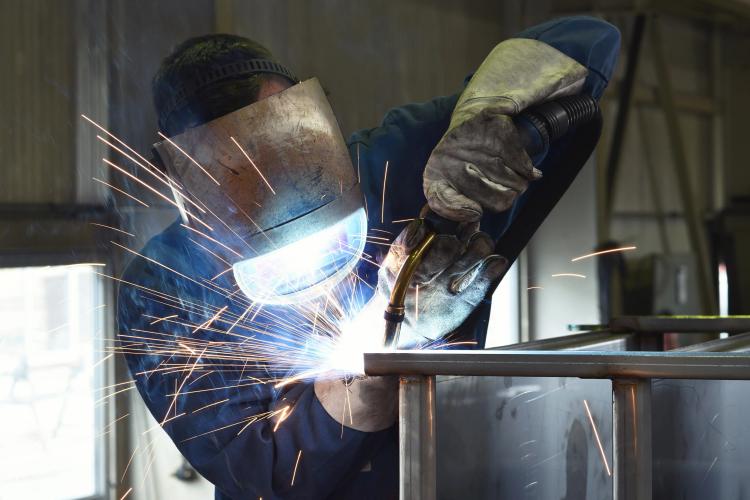
Industrial Welding: Processes, Uses, and Advice
Invisible to the naked eye in many structures, yet indispensable, welding is a cornerstone of modern industry. Whether in metal construction, boilermaking, or machine manufacturing, it enables the permanent assembly of metal parts, while ensuring strength and reliability.
In this article, we explain the fundamentals of industrial welding: its different processes, their applications depending on materials and thickness, the criteria for choosing a technique… and most importantly, how to select a good welding contractor if you are an industrial buyer.
How to Find a Good Subcontractor for Mechanical Parts?
In industrial sectors such as aerospace, high-precision mechanics, or special machinery manufacturing, choosing the right subcontractor can make all the difference between a successful project and critical delays. From part design to machining, from one-off production to large series, the challenge is to find a reliable, skilled, and responsive technical partner.
This article provides a structured guide to selecting an industrial subcontractor, with the right criteria, analysis tools, and a deep understanding of mechanical and industrial requirements.
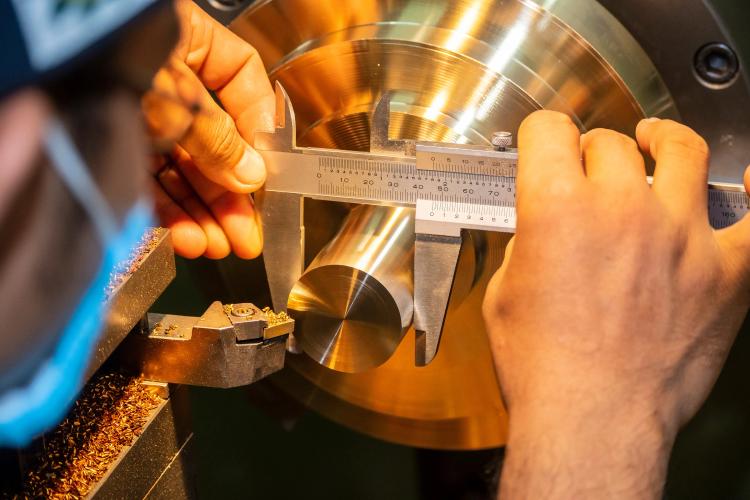
How to Find a Good Subcontractor for Mechanical Parts?
In industrial sectors such as aerospace, high-precision mechanics, or special machinery manufacturing, choosing the right subcontractor can make all the difference between a successful project and critical delays. From part design to machining, from one-off production to large series, the challenge is to find a reliable, skilled, and responsive technical partner.
This article provides a structured guide to selecting an industrial subcontractor, with the right criteria, analysis tools, and a deep understanding of mechanical and industrial requirements.
Subscribe to receive our newsletter
Follow our news right now by subscribing to our newsletter!
Platform
Newsletter
Receive the latest industry news
© 2026 QuoProd. All rights reserved.